10 Best Juicers of 2026, Slow, Centrifugal and Citrus Compared
Every Saturday my two put their juice orders in before I've filled the kettle, orange for one and carrot and apple for the other, and our old juicer (loud enough to wake the street, miserable to scrub) finally went to the tip this year. Finding its replacement sent me through UK juicer roundups, spec sheets and amazon.co.uk listings. For most homes, the best juicer is the Ninja Cold Press Juicer, JC151UK: a quiet slow juicer with two pulp filters, dishwasher-safe parts and a footprint that won't swallow your worktop.
I haven't run all ten through my own kitchen, and this list doesn't pretend I have. It's a research ranking of slow, centrifugal and citrus juicers, scored on juice texture, prep, cleanup, noise and size, and cross-checked against UK reviewers wherever they'd covered a model at all. Only after fresh orange juice? Skip to the Smeg citrus press.

- Smooth, full glass: Nine-segment auger presses slowly. Two filters for less or more pulp.
- Less prep work: Auger redesigned to clog less than the older JC100EU. Fewer stoppages.
- Quick rinse cleanup: Removable parts are dishwasher-safe. A cleaning brush comes in the box.
- Easy morning routine: Three simple steps to a glass. Quiet motor suits early starts.
- Tidy on the worktop: Just 18.16 cm wide. Sits beside the kettle without a fight.
- Thoughtful extra touches: 700ml jug, 1.1L pulp container and a tamper. Recipe guide included.
- Jug size: The 700ml jug fills fast. Larger families will empty it twice.

- Smooth, full glass: Up to 80 percent extraction claimed. Micro-sieve keeps juice fairly smooth.
- Less prep work: XL feeding tube takes bigger chunks. Less chopping than narrow chutes.
- Quick rinse cleanup: QuickClean sieve, cleanup claimed in 90 seconds. All parts dishwasher-safe.
- Easy morning routine: 1 litre jug, or juice straight into a glass. Drip stop included.
- Tidy on the worktop: Slender at 13.7 cm wide. Pulp container stores inside the jug.
- Thoughtful extra touches: Cord storage plus the HomeID recipe app. Two-year warranty listed.
- Pulp bin: The 0.6L pulp container is small. Expect to empty it mid-batch.

- Smooth, full glass: Claims up to 35% more juice. Slow 50rpm pressing leaves less pulp.
- Less prep work: 3L auto-hopper takes whole produce. Load it up and walk away.
- Quick rinse cleanup: Electric cleaning brush reaches every angle. Several brushes come included.
- Easy morning routine: Hands-free feeding while you pack lunches. Triple safety system too.
- Tidy on the worktop: Narrow base, just 21 cm wide. Fits a slim worktop gap.
- Height: Stands 47.2 cm tall. Check the gap under your wall cupboards.

- Smooth, full glass: Stainless steel strainer catches pips. Universal reamer fits small and large fruit.
- Less prep work: Halve the fruit and press down. No peeling or chopping needed.
- Quick rinse cleanup: Steel reamer and strainer rinse clean. Few parts to wash afterwards.
- Easy morning routine: Pressure sensor starts it automatically. Anti-drip spout pops up to pour.
- Tidy on the worktop: Small round base, 16.5 cm across. Lid keeps dust off between uses.
- Citrus only: Oranges, lemons and limes only. No apples, carrots or leafy greens.

- Smooth, full glass: Cold Spin Technology limits heat. Big Squeeze aims for a higher yield.
- Less prep work: Extra-large feed chute takes whole items. Very little chopping beforehand.
- Quick rinse cleanup: Spout plug allows a quick rinse between juices. Fast flavour changes.
- Easy morning routine: 2L Seal and Store jug. Make a batch and refrigerate the rest.
- Tidy on the worktop: Space-saving design, according to Sage. Brushed steel body wipes down easily.
- Mixed power figures: Listing says 1300 watts, one bullet says 240W. Hard to compare.
- Frothier juice: Fast spinning adds froth. Slow presses give a smoother glass.
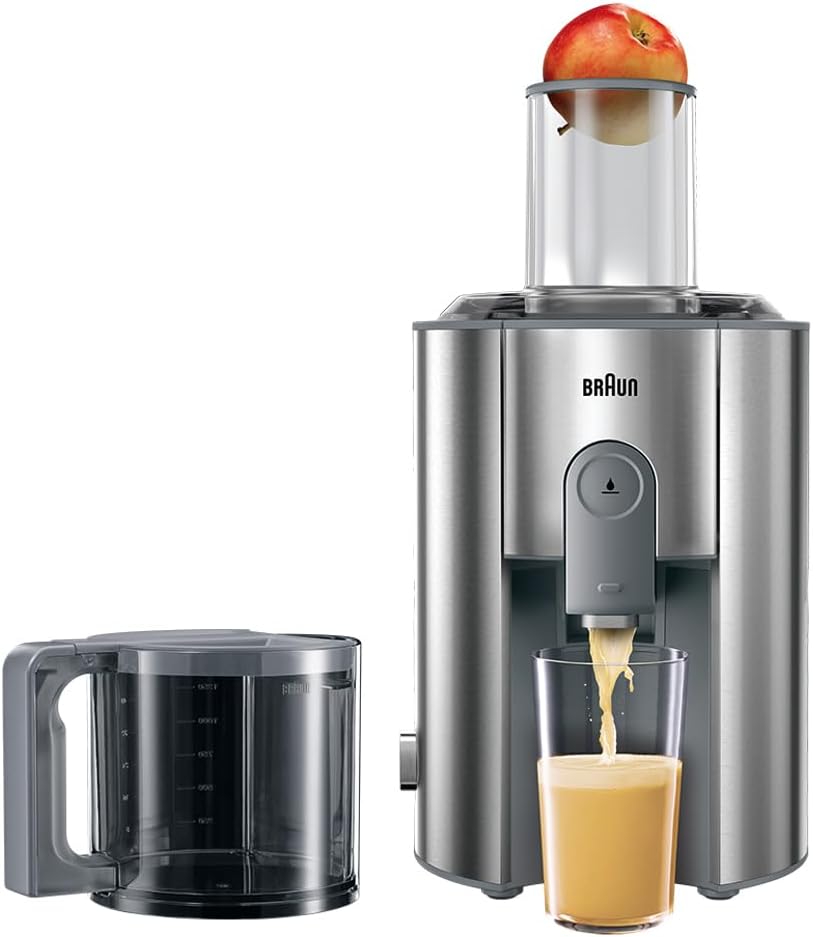
- Smooth, full glass: Foam separator jug holds back the froth. Pours clearer juice into glasses.
- Less prep work: Large 75mm chute takes whole fruit. Apples drop straight in.
- Quick rinse cleanup: All detachable parts are dishwasher-safe. Stainless steel sieve resists rust.
- Easy morning routine: Braun claims a glass in 15 seconds. Two speed settings on board.
- Tidy on the worktop: Cable storage tucks the lead away. Anti-drip stop protects the worktop.
- Width: Listed at 40.6 cm wide. Claims a big slice of worktop.

- Smooth, full glass: 250W masticating motor at 60rpm. Makes nut milk and sorbets too.
- Less prep work: 135mm chute and self-feeding hopper. Whole fruit, minimal chopping needed.
- Quick rinse cleanup: Unibody design with fewer parts. BPA-free pieces are dishwasher-safe.
- Easy morning routine: Enclosed design, no exposed moving parts. Auto shut-off adds reassurance.
- Short warranty: Only a 1 year warranty listed. Most rivals here offer longer cover.
- Hopper size: Listing says 1.8 litres, another spec 1.2L. Real capacity unclear.
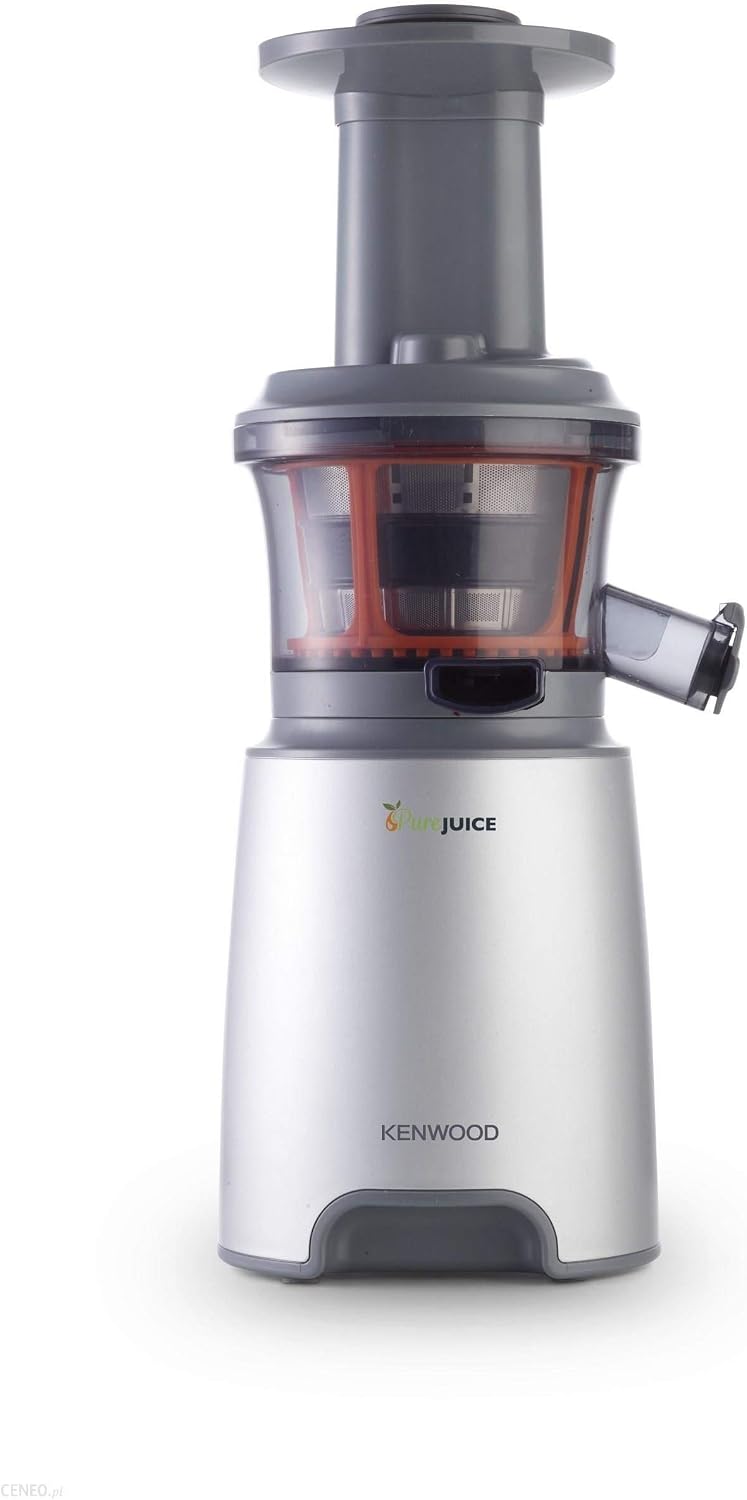
- Smooth, full glass: Slow press at 60rpm. Gentler on fruit than a spinning basket.
- Less prep work: Light at 1.98 kg. Lifts out of a cupboard without a struggle.
- Quick rinse cleanup: Rinse-through function flushes pulp. Less dismantling between different juices.
- Easy morning routine: Quiet operation listed. Suits early starts before the house wakes.
- Hand wash: Not dishwasher-safe. Every part goes in the sink by hand.
- Sparse listing: Very little detail on the listing. Hard to judge long-term durability.

- Smooth, full glass: Straining plate traps seeds and bits. Smooth, kid-friendly juice every time.
- Less prep work: Two cones fit grapefruit down to limes. Just halve and press.
- Quick rinse cleanup: Few parts to rinse. Anti-dust cover keeps it clean between uses.
- Easy morning routine: Motor starts when you press the fruit. Flip the spout to stop drips.
- Mixed wattage: Title says 100W, one spec says 40W. Modest power either way.
- Small jug: The 0.5L jug collects a few glasses. Big batches mean emptying it.
- Generic brand: No named model line. Less brand history than Smeg or Braun.

- Smooth, full glass: Heavy cast iron lemon reamer. Built for squeezing citrus hard.
- Less prep work: Halve lemons, oranges or grapefruit. Two cones listed for different sizes.
- Quick rinse cleanup: Attachments are dishwasher-safe. The cast aluminium housing wipes clean easily.
- Easy morning routine: 100W motor for steady pressing. 0.6L collects several glasses at once.
- Tall body: Listed at 46.6 cm tall. Won't fit under every wall cupboard.
- Thin details: Few details on the Amazon page. Power figures also disagree.
Other Juicers Worth Considering

- Strainer-free chamber for scrub-free cleaning.
- Hands-free hopper fits whole produce.
- Quiet motor and BPA-free parts.
- Premium money for a smaller hopper than the Kuvings.
- Listing gives conflicting power figures.

- Widest chute in this guide at 165mm.
- Triple filter for smoother juice.
- Reverse function helps clear clogs.
- Little editorial coverage to go on.
- Plastic body throughout.

- XL 130mm chute takes whole apples.
- 1000ml juice cup and 900ml pulp container.
- Forward and reverse controls.
- A newer listing with little track record.
- Few independent write-ups to check against.

- Juices straight into a 470ml to-go cup.
- Compact enough to live in a cupboard.
- Attachments go on the dishwasher top rack.
- Small cup suits one person, not a family.
- Centrifugal, so expect some froth.
In-Depth Reviews of the 10 Best Juicers
Each review explains what the listed specs mean in a real UK kitchen, where each juicer falls short and who it suits. The personal notes are about my own worktop, routine and family, not a lab bench.
#1 · Editor's Choice
Ninja Cold Press Juicer Machine, JC151UK
Saturday breakfast in our house comes with two juice orders and very little patience, so a juicer that's quiet and quick to strip down matters more to me than a headline yield figure. That's why the Ninja cold press juicer sits at the top. Its nine-segment auger presses slowly, Ninja says the redesign clogs less than the older JC100EU, and the two filters let you choose pulpy or smooth. Every removable part goes in the dishwasher. It isn't perfect, though. The 700ml jug is on the small side for a family batch, and the chute is narrower than the self-feeding Kuvings or Fridja, so apples need quartering first.
The verdict: The best juicer for most UK kitchens: quiet, easy to clean and sized for a normal worktop, as long as you don't mind a little chopping.
#2 · Runner-Up
Philips Viva Collection 1L Masticating Juicer, HR1889/71
Most slow juicers make you dread the washing-up, and Philips has built the Viva Collection around fixing that. The QuickClean micro-sieve is designed to rinse clean, Philips puts cleanup at 90 seconds, and every part is dishwasher-safe. The 1 litre jug is bigger than the Ninja's, and there's an XL feeding tube plus a drip stop. I like that the pulp container tucks inside the juice collector, because cupboard space in our kitchen was spoken for years ago. The pulp bin itself is small at 0.6L, though, so a long carrot session means emptying it halfway.
The verdict: A strong runner-up for anyone who juices often and hates scrubbing sieves.
#3 · Premium Pick
Kuvings AUTO10S Self-Feeding Slow Juicer
Buy the Kuvings AUTO10S if you juice in bulk (a week of bottles on a Sunday afternoon, say) and would rather load a hopper than feed a chute piece by piece. The 3L auto-hopper takes whole fruit and veg, the 200W motor turns the auger at a slow 50rpm, and Kuvings claims up to 35% more juice than conventional juicers. Its 15-year motor warranty is the longest cover I found on this list, and an electric cleaning brush handles the fiddly strainer. It's a premium machine, however, and a tall one. At 47.2 cm it won't slide under the wall cupboards beside our hob, so in my kitchen it would live in the corner by the back door.
The verdict: Pick it for big weekly batches and long warranty cover; if scrubbing worries you more, the strainer-free Hurom H400 is the gentler alternative.
#4 · Best Citrus Press
Smeg 50's Style Retro Citrus Juicer, CJF01BLUK
If your juicing starts and ends with oranges, you don't need a slow juicer at all, and the Smeg CJF01 is the citrus press I'd happily leave out on the counter. The stainless steel reamer handles both small and large fruit, a pressure sensor starts the motor when you push down, and the pop-up anti-drip spout stops that sticky ring forming on the worktop. It's a much pricier way to squeeze an orange than the Geepas, and the 70W motor is gentle rather than quick. You're paying partly for the 50s styling, which nobody in my house would count as a downside.
The verdict: Buy it for fresh orange juice and a press that earns its spot on the counter.
#5 · Best for Big Batches
Sage Nutri Juicer Cold Plus Centrifugal Juicer
Let's get the confusing bit out of the way: the Sage listing quotes 1300 watts in one place and a 240 Watt motor in another, so I wouldn't choose it on power figures. Choose it for the jug. The 2L Seal and Store jug lets you juice a big batch, cap it and keep it in the fridge, and the extra-large feed chute takes whole items with little chopping. The spout plug lets you mix juice in the jug and rinse between flavours. It's still a centrifugal machine at heart, so expect a frothier glass than the Philips or Ninja would pour.
The verdict: Good for big-batch households who value speed and a sealed jug over the smoothest texture.
#6 · Best for Speed
Braun Multiquick 7 Centrifugal Juicer, J700
Judge the Braun J700 on speed and it's hard to fault. Braun says one glass takes 15 seconds and a litre less than a minute, which is the sort of claim that matters at 7am with book bags piled by the front door. The 1000W motor feeds a large 75mm chute, the 1.25L jug has a foam separator, and an anti-drip system stops the spout dribbling. Size is the trade-off. Listed at 40.6 cm wide, it takes a real bite out of a worktop, and a spinning basket at that power is never going to be as hushed as a slow press.
The verdict: The quickest route to a jug of juice on this list, if you have the worktop space to give it.
#7 · Best Value
Fridja f2500 Self-Feeding Whole Fruit Juicer
Chopping is what kills most juicing habits, and the Fridja f2500 is built around avoiding it. The 135mm chute and self-feeding hopper take whole fruit, and the 250W motor turns the auger at 60rpm, so you get slow-pressed juice for far less outlay than the Kuvings. I'd keep an eye on two things. The listed warranty is only 1 year, shorter than most rivals here, and the hopper figure is muddled, with 1.8 litres on the listing and 1.2L elsewhere. The enclosed design with no exposed moving parts is reassuring if small hands like to help, as mine always do.
The verdict: The value route to hands-free juicing, provided a short warranty doesn't bother you.
#8 · Best Budget
Kenwood PureJuice Slow Juicer, JMP601WH
I'll be straight: I nearly left the Kenwood PureJuice off. It's a slow juicer at an entry-level price, with a 150W motor turning at 60rpm, a pulp container, a rinse-through function and a sorbet attachment for frozen-fruit puddings. At 1.98 kg it's light enough to keep in a cupboard and lift out at weekends. But nothing goes in the dishwasher, the listing is thin on detail, and I couldn't find independent reviewers who'd covered it. If your budget stretches, the Ninja is the safer buy.
The verdict: A cheap juicer for trying slow juicing, but go in with modest expectations.
#9 · Best Compact Citrus
Geepas 100W Electric Citrus Juicer with 2 Cones
You'd struggle to find a simpler machine than this Geepas citrus juicer. There's no named model line, just a 100W press with two cones, one for grapefruit and oranges and one for lemons and limes, plus a straining plate that catches pips. It starts when you press the fruit, and the spout flips up to stop drips. The 0.5L jug fills quickly, though, and one spec sheet lists 40W rather than 100W. For a lemon squeezed over Friday fish and chips or a jug of squash-free orange for the kids, that hardly matters.
The verdict: Basic, compact and perfectly adequate for lemons and the odd breakfast orange.
#10 · Best for Lemons
Gastroback Advanced Pro S Citrus Juicer, 41150
Want a citrus press that feels like café kit? The Gastroback Advanced Pro S pairs a heavy cast iron lemon reamer with a cast aluminium housing, and the attachments go in the dishwasher. The title lists 100W. That's where the detail runs out. The Amazon page is sparse, one spec sheet lists 160W instead, and at 46.6 cm tall it needs clear headroom. Lemon goes into half of what I cook, so I see the appeal, but the Smeg covers most of the same ground in a smaller body.
The verdict: For heavy lemon users who want something sturdy and have the headroom.
How We Researched and Scored These Juicers
This ranking is built from UK editorial roundups, manufacturer spec sheets and amazon.co.uk listings, not a lab. I didn't put any of these juicers through a yield test or near a sound meter. Instead, we compared what each listing promises with which models independent UK reviewers had actually covered (several here have little or no editorial coverage, and their reviews say so), then scored all ten on the same weighted criteria.
What we compared for every juicer:
- Juicer type: slow (masticating or cold press), centrifugal or citrus press
- Juice texture and yield: filters, sieves and maker yield claims
- Prep: feed chute size, self-feeding hoppers and how much chopping each needs
- Cleanup: dishwasher-safe parts, brushes and strainer design
- Size and noise: listed dimensions, weight and quiet-motor claims
- Backing: warranty terms and whether independent UK reviewers had covered the model
How we weighted the scores:
- Juice quality (30%): texture, pulp control and yield claims
- Ease of use (20%): prep, chute or hopper size and controls
- Cleanup (20%): number of parts, dishwasher safety and sieve design
- Build and warranty (15%): materials, guarantee length and editorial backing
- Value (15%): what you get within each tier, judged qualitatively
Where a listing contradicts itself on power or capacity, the table below shows both figures. Where the Amazon product title gives a figure, the title wins.
What to Look For in the Best Juicer
Start with what you'll actually juice. Slow juicers, also sold as masticating or cold press juicers, crush produce with a slowly turning auger, so they're quieter, cope well with leafy greens and ginger, and pour a smoother glass with less froth. Centrifugal juicers like the Sage and Braun shred fruit against a fast-spinning basket; they're quicker and take bigger pieces, but they're louder and the juice separates sooner. If you mostly want orange juice at breakfast or lemon for cooking, a citrus press such as the Smeg, Geepas or Gastroback is smaller and far quicker to wash than any full juicer.
Prep is the hidden cost. A narrow chute means quartering apples and chopping carrots before you start, which is fine for a glass or two and tedious for a week's worth. The self-feeding hoppers on the Kuvings AUTO10S and Fridja f2500 take whole produce and feed it through on their own, which is why they're the ones to consider if you batch-juice on a Sunday.
Cleanup decides whether a juicer gets used or retires to the back of a cupboard. Look for dishwasher-safe parts (the Ninja, Philips, Braun and Fridja all qualify), a proper cleaning brush and a sieve that rinses rather than needs scrubbing. Slow juicers are tall, the Kuvings stands 47.2 cm, so check the gap under your wall cupboards. In a small UK kitchen where the kettle, toaster and bread bin already fight for room, a compact citrus press may be all you need.
On budget, a cheap juicer can still do the job: the Kenwood PureJuice is an entry-level slow juicer, and the Geepas covers citrus for very little. Mid-range money buys the Ninja or Philips, and premium money gets you a hands-free hopper and a long warranty. NHS advice is to keep fruit juice and smoothies to 150ml a day combined, so a modest jug is no hardship. Want one juicer that does most things well? Buy the Ninja and call it a day.
Key Specs Compared
| Product | Type | Power | Capacity | Our Score |
|---|---|---|---|---|
| Ninja Cold Press Juicer Machine, JC151UK | slow / cold press | 150W | 700 ml | 9.9 |
| Philips Viva Collection 1L Masticating Juicer, HR1889/71 | slow / masticating | 150W | 1L | 9.7 |
| Kuvings AUTO10S Self-Feeding Slow Juicer | self-feeding slow juicer | 200W | 3L hopper | 9.5 |
| Smeg 50's Style Retro Citrus Juicer, CJF01BLUK | electric citrus press | 70W | 0.6 litres | 9.3 |
| Sage Nutri Juicer Cold Plus Centrifugal Juicer | centrifugal (cold spin) | 1300W / 240W | 2L | 9.1 |
| Braun Multiquick 7 Centrifugal Juicer, J700 | centrifugal | 1000W | 1.25L | 8.9 |
| Fridja f2500 Self-Feeding Whole Fruit Juicer | self-feeding slow juicer | 250W | 1.8 litres / 1.2L | 8.7 |
| Kenwood PureJuice Slow Juicer, JMP601WH | slow juicer | 150W | 0.8L / 1 litres | 8.5 |
| Geepas 100W Electric Citrus Juicer with 2 Cones | electric citrus press | 100W | 0.5L | 8.3 |
| Gastroback Advanced Pro S Citrus Juicer, 41150 | electric citrus press | 100W | 0.6L | 8.2 |
Frequently Asked Questions
What is considered the best juicer?
For most UK homes, the Ninja Cold Press Juicer, JC151UK is the best juicer on this list. It's a quiet slow juicer with two pulp filters and dishwasher-safe parts. If you batch-juice whole fruit, the Kuvings AUTO10S is the premium step up, and for orange juice alone, the Smeg citrus press is simpler.
Is a slow juicer better than a centrifugal juicer?
For most people, yes, because slow juicers are quieter and give a smoother glass with less froth. They also cope better with leafy greens and ginger. Centrifugal juicers such as the Braun J700 are much faster and take bigger pieces, so they suit rushed mornings when speed matters more than texture.
What is the healthiest juicer to use?
No juicer makes juice healthy on its own, but a slow juicer is the usual choice if nutrition is your priority. Slow pressing creates less heat and froth than a fast-spinning centrifugal model. Whatever you use, keep portions small: NHS advice is a combined 150ml of fruit juice and smoothies a day.
Should I buy a juicer or a blender?
Buy a juicer if you want clear, thin juice, and a blender if you'd rather keep the fibre in a smoothie. A juicer separates the pulp from the juice, so each glass has less fibre. If counter space is tight, pick the one you'll genuinely use every week.
Do I need a separate citrus juicer for oranges and lemons?
Not always, but a citrus press is quicker and easier to clean for oranges, lemons and limes. Most full juicers want citrus peeled first, while a press like the Smeg or Geepas only needs the fruit cut in half. If fresh orange juice is the main reason you're shopping, a citrus press is the better buy.
Which juicer is easiest to clean?
Among the full juicers here, the Philips Viva Collection is the one built most around easy cleaning. Its QuickClean micro-sieve is designed to rinse clean, and every part is dishwasher-safe. The Ninja, Braun and Fridja also have dishwasher-safe parts, while the Kenwood PureJuice is hand wash only.
The Bottom Line
If you want one juicer that suits most kitchens and most mornings, the Ninja Cold Press Juicer is the one I'd buy, small jug and all. The Philips Viva Collection is the easy-clean alternative, the Kuvings AUTO10S is the hands-free batch machine, and if all you want is fresh orange juice, the Smeg citrus press will make you happier than any full juicer.
As an Amazon Associate I earn from qualifying purchases. See our affiliate disclosure for details. Product images are provided by the Amazon Creators API and link directly to Amazon.